Date: March 6, 2026 | Author: Giorgio Bellucci, Italian Gambling Culture & Traditions Expert
Why this page changed. It promised “secret stories” and told four that do not survive a check. One of them tied a named, still-operating Italian casino to organised crime without a single source: that was an accusation, not a story, and we removed it without repeating its details. That Wagner composed Tristan und Isolde “within those walls” is wrong on both place and date. That King Charles Albert lost a fortune at the Campione casino is impossible: he died in 1849 and that casino opened in 1917. And the “ghost of the Ridotto” is folklore, not a fact. What follows is the history that can be documented, and it is more interesting.
1638: the state opens a gaming room and closes it itself
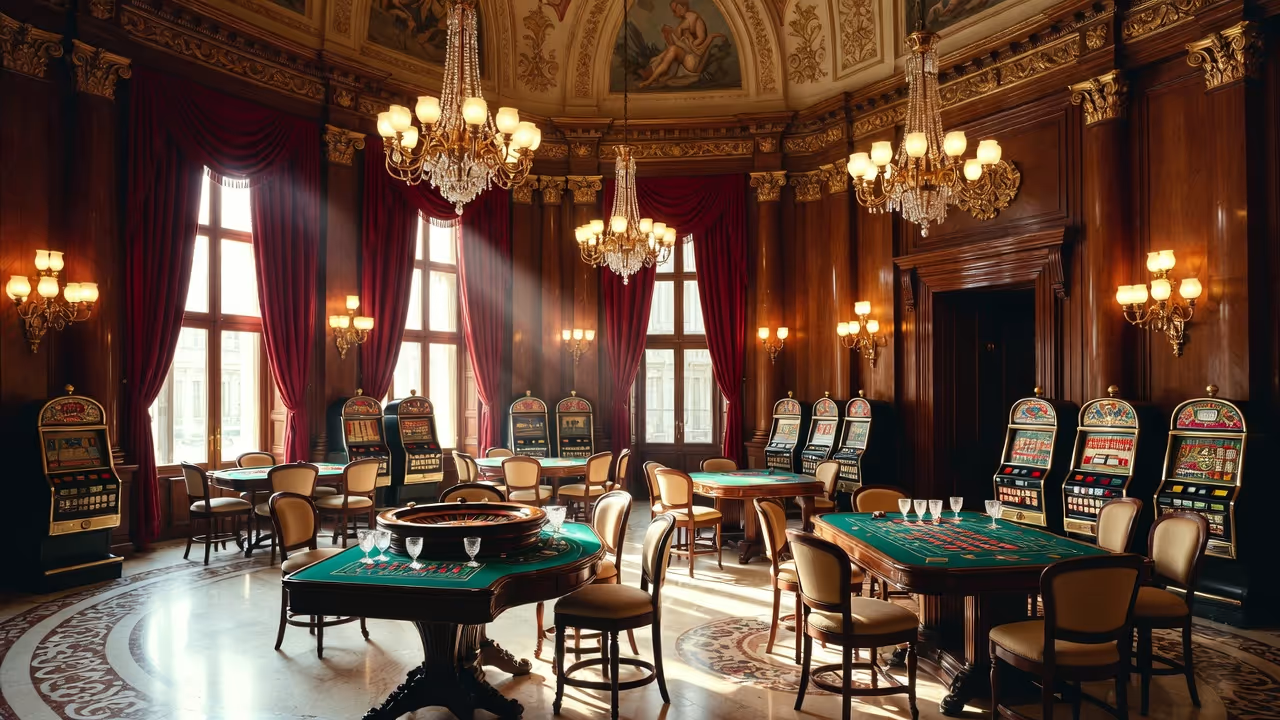
In 1638 the Republic of Venice licensed the Ridotto, a public gaming room in Palazzo Dandolo, in the parish of San Moisè. The idea was to control what was already happening in private houses during Carnival: you entered masked and in the required dress, and the mask is precisely what let patricians and commoners sit at the same table.
The part almost nobody tells is the ending. In 1774 the Great Council voted to close the Ridotto, and the reason was not abstract: too many patrician families had ruined themselves at the tables. The state that had opened the first public gaming room in Europe closed it a hundred and thirty-six years later, over its own aristocracy’s household finances. That is a more instructive story than any ghost legend.
Wagner in Venice: the correct version
The link between Wagner and Venice is real, but it is not the one that circulates. The composer worked on the second act of Tristan und Isolde during a Venetian stay in 1858–59, and not in a gaming house. Many years later, in the autumn of 1882, he moved with his family into a wing of Ca’ Vendramin Calergi, the palace on the Grand Canal where he died on 13 February 1883. That palace houses today’s Casinò di Venezia, and Wagner’s apartment can be visited by appointment as a museum. The verifiable fact is that: not an anecdote about composing at the tables, but an address you can still ring the bell at.
Italy’s four casinos, with their dates
Italy has four legal land casinos, and each has a date you can check in a minute. Sanremo opened in 1905, in an Art Nouveau building designed by Eugenio Ferret, with a theatre hall attached. Campione d’Italia, an Italian enclave inside Swiss territory, opened its casino in 1917, in a very specific wartime context: gathering information from foreign diplomats in Switzerland. Saint-Vincent, in the Aosta Valley, opened in 1947. Venice is the oldest as an institution and the newest as a venue: the municipal casino moved into Ca’ Vendramin Calergi in the twentieth century, inheriting the name of a tradition that began in 1638.
Campione is also the only one of the four to have closed in recent times: the operating company went bankrupt in 2018, the casino stayed shut and reopened in 2022. It is the most concrete reminder that a casino is not eternal, not even when it is publicly owned.
What to do with a “secret” story
The method matters beyond this page. A gambling story is verified in three steps: look for a date (an opening, a law, a closure), look for a document that contains it (a council decision, a deed, a museum catalogue), and ask who benefits if the story circulates. Gambling legends almost always tell of impossible wins or spectacular ruin: both versions make gambling more interesting than it is, and the second no less than the first.
For dates and buildings, the best sources are municipal archives and museum catalogues; for recent corporate events, company registers. Neither needs a subscription, and neither tells ghost stories.
Questions and Answers
What is the oldest casino story in Italy? The Casino di Venezia, founded in 1638, is the world's oldest and hides secrets of nobles and intrigue.
How does history influence modern gambling in Italy? Historical traditions shape current regulations, making gaming a mix of passion and control.
Are there unusual facts linked to Italian celebrities? Yes, like Giacomo Casanova who used casinos for his romantic and political adventures.
To delve deeper into the psychology behind these historical facts, read our article on The Psychology of Gambling: Italian Cultural Influences. And for official regulations, visit the ADM website.
These historical secrets never stayed confined to the archives: Italian cinema picked them up and turned them into unforgettable scenes, from Fellini's decadent salons to Sorrentino's melancholic gaming tables. Discover how in our article on Casinos in Italian Cinema: Emotions and Passions from the Films. And to hear the voice of someone who lived the green table for 15 years, don't miss our Exclusive Interview with a Professional Player.
Don't miss the opportunity to relive these stories in modern online gambling. Return to Casinoyna.net for exclusive bonuses and digital adventures inspired by Italian history!